


If you find yourself here, you’ve probably read the “Fundamentals of Rucking”. If you haven’t, please read that as a primer. “The Fundamentals of Rucking” was designed to get you rolling down the runway and airborne. This rucking training guide picks up where the fundamentals left off in part 1. Now that the gear and flaps are up, we need to teach you to fly in good weather and in the soup when there is no horizon. The only instruments we have are the signals our body gives us. This article will teach you how to read your instruments. Every gauge we will use will help you fly to your destination at the correct altitude, airspeed and direction. We will build in flight planning. We will designate alternates before we need them. When turbulence arrives, as it usually does, we will have techniques to ride it out instead of fighting it.
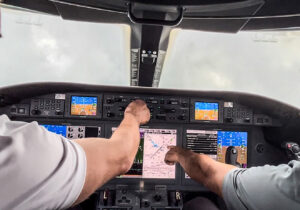
The Instrument Panel
If you were a passenger in the back of a plane and climbed into the cockpit, the two gauges which matter the most are airspeed and altitude. Airspeed allows you to climb and altitude gives you the buffer. Airspeed is the foundation, without it, the plane drops out of the sky. A plane without airspeed can’t climb or turn, it only can fall. A rucker without knowing their base pace and distance can’t add load, distance, change terrain and can’t sustain. Build airspeed the boring way, consistent sessions over time, time is the emphasis here. Remember in part 1 we talked about homeostasis, yeah that, your body takes time to adapt. Numerous consistent sessions at a set weight, distance and time until it becomes easy, will give you a solid understanding whether you are capable of maintaining these set points. Once you have a set point “cruise speed” established, then we can adjust pitch. With enough airspeed, we can trade some of it for increasing altitude, that’s either adding distance, weight, elevation change, terrain difficulty or reducing time. The caveat is that there is a very small margin for trading airspeed for altitude. Too much pitch and you stall and fall out of the sky, not enough and you can’t climb over that mountain range ahead. The biggest mistake people make with rucking is that they try to climb way too fast until they have built enough airspeed. They ruck 2-3 times a week for a couple of weeks then immediately begin to add weight, speed or distance. It takes time for the bones, joints and muscles to adapt. You won’t know for sure if the stimulus is too much in that short period of time. This is where most people begin, consider 10-20% of your bodyweight in the ruck for most healthy individuals. Age shifts that curve. This is the range most load-carriage research uses for general populations. Under 10% and you’re mostly walking with a daypack; the bone and joint stimulus is too low for any adaptation to occur. Over 20% initially and you’re walking into territory where connective tissue starts lagging behind muscle, which is exactly where overuse injuries live. (Knapik et al., 2012; Orr & Pope, 2015)
The VSI –
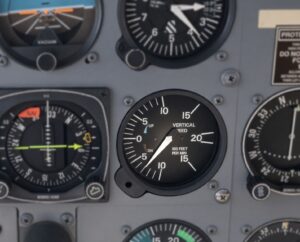
In the cockpit your vertical speed indicator (VSI) shows your rate of climb or descent. In rucking, that’s your forward trajectory, not where you are, but where you’re headed. Taking notes after each session, the set variables and utilising judgement on session intensity, is one part. The other part is noting how your body felt 1-2 days after. If you felt good after increasing one of your set variables, that’s considered a rate of climb. Soreness that lingers, that’s a rate of descent. Adding weight is like pitching up, you climb at first, but if you pitch up harder than your airspeed can support, the climb rate falls off which can lead to a stall. If you experience lingering soreness after a load increase it isn’t just a bad day, it’s your vertical speed indicator pointing from up to down. The first tool you will need is a logbook, if you’re serious about maximising your goals, you will need to track your progress, this will come in handy when you find yourself in a rut.

Without a detailed logbook, it’s just numbers without a story, each column compared to the next will give you a clear picture of the day, each row will tell you your vertical speed day by day.
Date and time
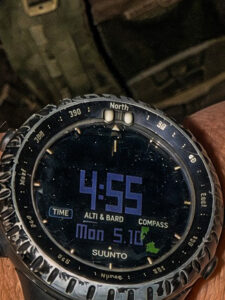
Date and time anchor the row, it separates a Tuesday shuffle after work from a Saturday morning long one, this column gives context to everything to the right.
Temperature/humidity – this is the quiet variable. It doesn’t show up in your legs or your lungs the way weight does, but it changes the cost of everything. 90 degrees today from a baseline of 75 and your heartbeat runs approximately 15–30 bpm higher (Pandolf et al., 1975).
Goal – is the daily goal of the session, it’s like a miniature flight plan. It should be one sentence. For example, “Build cruise speed on flat ground.” “Test twenty percent on hills.” “Adapt to new load”, “decrease time to the summit”.
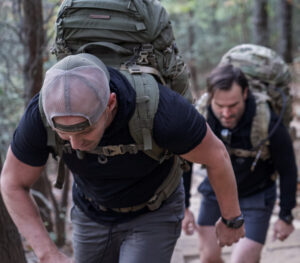
Remember that not all goals need to increase day over day, your body doesn’t respond like that, it takes time. Naming the variable before you walk out the door is what keeps the one-at-a-time rule honest. If you’re increasing weight and distance together, expect a stall if left unchecked.
Weight & body weight percentage – Twenty percent of a two-hundred-pound frame is forty pounds. Twenty percent of one-forty is twenty-eight. The absolute number is what your joints feel. The percentage increase over time is what your physiology responds to. If your buddy adds 5lbs, you may need to add 7lbs. Both columns, because both stories matter.
Terrain

Terrain sits next to weight for a reason. Heavy and fast on a flat vs. heavy and slow on a hill climb is a different pitch. If both moved in the same week, you can’t read which one moved the needle.
Distance and time
These two give your pace, no separate column needed. Derive it, and the act of deriving it forces you to look at the numbers. Terrain, altitude and load all can heavily influence pace. Remember, not all bad numbers for the day end up actually being that bad at all.
Water consumption – is the one people skip and regret. Dehydration mimics fatigue, perception becomes the mechanism which decreases performance. It drops your energy ratings and makes a session look like overtraining when it was just fluid. (Cheuvront & Kenny, 2014; Goulet, 2013).
Track it and you rule that out. Ensure when you track it you factor this into your starting ruck weight. Are you weighing your ruck dry or wet? There is no wrong answer, just factor it into your calculations. 1 litre of water = 1kg or 2.2lbs. Also remember that this weight will decrease as water is consumed.
Starting state
This is where you began — rested, sore, flat, sharp. It’s the baseline the cost column gets measured against. It isn’t the most reliable and it can change throughout the session, what if you have been at a desk all day, you’re not fatigued from overtraining, but you feel tired. Getting the blood moving with a bit of caffeine can flip everything. To judge the energy expenditure. A cost of 4 points after a 9 is a different flight than a cost of 4 after a 3. Listen to your body before you step off.
Energy expenditure
This is not to be confused with intensity; a slow long ruck is less intense than a short and fast session. Expenditure is the price of the session. Starting state is what you brought to the table then subtract expenditure which gives you how much gas you have in the tank after. Together with starting state, it tells you whether you flew with a margin of fuel or burned reserves.
Each column is meaningless alone…
-
Date and time set the stage.
-
Goal names the mission.
-
Weight tells the pitch
-
Terrain tells the landscape
-
Distance and time give your airspeed
-
Water helps with the anomalies
-
Starting state and expenditure reveal whether you flew with margin
No single number tells a story, the row does. This is the whole point of the logbook. You WILL have days which feel like garbage. You WILL have days which feel like glory, half of the time the log will disagree with your gut feeling. A session which felt like a slog might actually show clean numbers across every column. A day that felt easy might reveal you were dehydrated and got away with it. The best part is the log doesn’t care how you “felt”. It shows what actually happened. Sometimes when you lay it all out, the “bad day” turns out to be a personal record you were too tired to notice.
What happens when the logbook doesn’t make sense?
I recommend starting with the hidden variables, the ones you don’t always easily look for. Compounding sleep deprivation from two nights ago. A new pair of insoles or different boots. A stressful week at work that raised your cortisol levels. An illness your body barely registered but your immune system is still recovering from. A hard weightlifting session a few days back with an extended recovery time. For the women readers out there, your menstrual cycle can shift recovery capacity and pain in ways that mimic overtraining. Remember, the logbook shows what you measured, it doesn’t show what you didn’t. This table is a good baseline to work with, but by all means, if you want to geek out and add more columns, go for it!
Refuelling
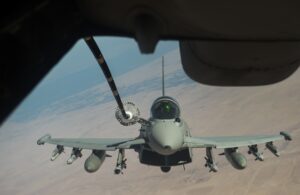
An engine is only as good as what you fuel it with, in the body your fuel is made up of nutrition, rest and mental state. Most people treat refuelling as an afterthought; they eat with convenience and comfort. Convenience is what’s available, you grab what’s there because it’s easy. Comfort is the trap where you know better, but choose the pizza and beer because it feels good in the moment. Most people treat rest with the same degree as pizza and beer; on average we have very poor sleep habits. This section one could write an entire book on, I am going to give you a few things to consider which we will elaborate on in the future.
Nutrition
Without the best fuel in the engine, your aircraft’s range is limited at best, your engine’s life shortened at worst.”
Protein
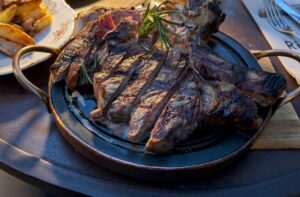
Protein is the headliner, consume roughly 30 grams of it within a couple of hours of training will give your muscles the amino acids to rebuild what the session broke down. That’s not a bodybuilding number; it’s the baseline for recovery. (Moore et al., 2009; Morton et al., 2018)
Whole foods – Beyond protein, the quieter story is that extra processed crap you don’t realise you’re eating. Unfortunately, in the United States the food supply is a different animal, some ingredients are banned in other countries linked to cancer. (Toth et al., 1975; Hirakawa et al., 2003; Takahashi et al., 2014) This is a side note, skip over if you choose:
A perfect example is gluten, found in most breads and pastas. There is absolutely nothing wrong with gluten, it’s a protein. Unless someone has Celiac Disease, and should avoid it, you should be able to digest it without a problem. That being said, we as the public have been misled about gluten, we’ve been told that your symptoms of lethargy, GI issues, vertigo, neuralgia etc., are potentially due to gluten.

Gluten has become the boogeyman; one sign is that almost every restaurant today has a gluten-free menu or options. Let’s be honest guys, what is found in American wheat products, isn’t just yeast, ground wheat, water and salt. Take a look at the ingredients found in your local bread aisle, many of which you can’t pronounce and have over 30 ingredients. What is becoming more apparent in recent years is that when Americans travel abroad with verified gluten sensitivities, they have zero symptoms when eating pizza in Italy, or pretzels in Germany. The speculation is that two ingredients banned in European flour, but found in “enriched” US flour are Potassium Bromate and Azodicarbonamide. Potassium Bromate is banned across the European Union, United Kingdom, Canada, China, India, Brazil, and Nigeria. Azodicarbonamide is banned in the European Union and Australia.
Personally, I have been sensitive to American wheat for over a decade, fever, chills, aches, vertigo from even the smallest trace amounts. If I eat the same flour overseas zero symptoms. We have recently been buying imported flour online and making our own bread and pastas for the last few months with zero symptoms, using only yeast, flour, salt and water.
The bottom line is that nutrition is a highly complex subject matter and has been written about at length, with all the books and diets on the market it can be very confusing on what is good science and what is bro-science. One thing I have learned with having a background in human physiology is that we are all very different. So, without offering advice which could be contraindicated for someone else, I believe that keeping it simple is the way to go. Some additives genuinely serve a good purpose. For example, iodized salt prevents goitre, vitamin D in milk addresses deficiency, ascorbic acid is simply vitamin C doing its job as a preservative. The issue isn’t additives as a category. It’s the volume, and of the ones with thin safety data parked right next to the ones which have been peer reviewed for real function for decades. Eating whole foods, the way humans have for millennia isn’t a trend, it’s the original recipe Grandma used to use.
Hydration
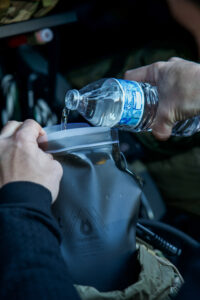
You’ve already seen water in the logbook; this is about what water alone doesn’t fix. When you sweat, you lose sodium and potassium, adding plain water just dilutes what you have left. This begins with a headache, can lead to cramps and can simply present with that feeling of overtraining. For sessions under an hour in mild climates, water is sufficient. Beyond an hour adding electrolytes (not sports drinks packed with sugar) just sodium and potassium which matches what you’re losing through sweat. The cheapest instrument you have is checking urine colour. Pale straw colour is perfect, dark amber means you are behind, knock back another litre.
Supplementation – Anyone who has walked into a supplement shop can easily be overwhelmed by rows upon rows of bottles with heavy marketing on the labels. Beginning with how the industry works is a solid start. In the US there is very little regulation on supplementation. The Dietary Supplement Health and Education Act of 1994 let companies sell products without proving safety or efficacy first, the burden is on the FDA to prove harm after the fact. That’s why you get labels promising everything from joint repair to testosterone boosts with zero requirement to back it up. To be practical about it, treat every label as unproven until independent third-party testing says otherwise. USP or NSF certification on the label is a solid start.
Creatine monohydrate

Creatine monohydrate is the supplement with the deepest evidence base, it has been shown to improve strength, power, and lean mass across hundreds of trials, and it’s cheap. The research commonly uses 3-5g daily. (Kreider et al., 2017; Branch 2003)
Vitamin D

Most adults are low, especially in winter in northern climates, when it comes to sport performance, low numbers have been linked to reduced muscle function and higher risk of injury. The strength benefit is modest; it only is beneficial if you are low in it. Above adequate blood levels, extra vitamin D adds little. A blood test from your doctor will determine whether you need it and how much. (Sist et al., 2026)
Omega-3 – We have all heard of getting those “omegas” here is the most recent data we have on it. A meta-analysis done just this year in 2026 of 41 trials found EPA and DHA supplementation moderately reduced interleukin-6, tumor necrosis factor alpha, creatine kinase, and delayed-onset muscle soreness DOMS. Effects were strongest at 2 grams or more daily for at least 6 weeks, particularly in recreational athletes. The International Society of Sports Nutrition’s 2025 position stand adds that omega-3s may support endurance capacity, reduce subjective soreness, and improve sleep quality. (Li et al., 2026)

Caffeine – This is the most proven performance enhancer in sports nutrition. It improves endurance, strength, power and speed across dozens of studies. That being said these studies used low doses, too much and you can get undesired side effects. Jitters, racing heart and a hard crash after or mid workout. (Grgic et al., 2020; Wang et al., 2023)
Disclaimer: As always, consult with your physician with questions regarding your diet.
Rest
This is something many are sub-par with. You break tissue down while crunching the gravel. The building blocks are good nutrition. The builders, that’s sleep.
Most adults need seven to nine hours, and rucking doesn’t lower that number, it only raises the cost of falling short. I’m not here to tell you to get to bed at an early enough hour, if you are reading this you are all grown-ass adults. What I will do is give you a few tools to maximise your sleep habits and quality, but at the end of the day, if you don’t implement them with action, you won’t see your true potential in the gym and with the ruck on.
Consistency beats duration. Have the same bedtime and wake-up EVERY DAY, weekends included. Your circadian rhythm doesn’t care that it’s Sunday.
Sleeping in a cooler than normal temperature 67F is perfect for most people, overheating can interrupt sleep.
Your room must be dark, eliminate any LEDs from the room. If you can’t, tape over them. We have evolved over time with a very poor ability to handle light at night without pulling us out of deep REM.
Noise is a mixed bag of tricks. Some people need a room quiet enough to hear a pin drop, while others need the old fan running which sounds like a coffee machine. Experiment with silence and also sleep machines which make white noise or ambient noise to help you fade away.
Caffeine affects some while not others after 12pm. If you’re like me, a double shot of espresso after a nice meal has zero effect on sleep. You do you.
Alcohol is deceptive, it can appear to feel like it helps put you to sleep, but it fragments the second half of the night and can prevent you from achieving deep REM.

If you ignore all the above and only choose this one, you are better off. That’s how important it is. 1 hour before bed, quit using the phone. Not dimmed, not on “do not disturb”, on silent in the other room. You must break the urge to reach for the phone, doom scrolling before bed, in the middle of the night, or first thing in the morning. The addictive habit of doom scrolling will ruin your life. You don’t have to take it to this extreme, but I deleted all of my social media accounts several years ago. Life is so colourful without it. You will be fine; we were fine for millennia. Each day before bed, your brain needs a signal to wind down, a glowing screen telling you the world is on fire is the opposite of that signal.
Mental state
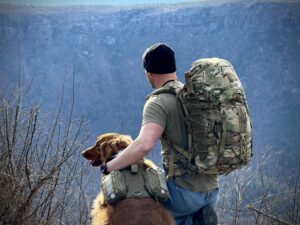
This is the third fuel. It’s the one most people ignore until it plateaus them. Stress from work, worry about money, marital issues, grief any of it raises your cortisol baseline and makes the gains in the gym cost a whole lot more. You can’t out-ruck a bad week. Your fuel tank includes your head, not just your stomach. If you’re in a bad place from stress mentally. Before the ruck session, I place the ruck on the ground while lacing up my boots.
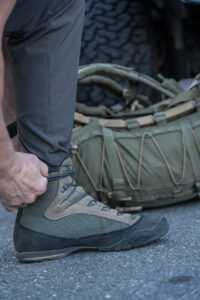
After lacing I sit next to it, eyes closed with slow deliberate meditative breathing. In that state I visualise each and every problem I have on a plate, I see it sitting on the ruck. I pick the plate up and place it on my worktable. I remind myself that this isn’t the workplace and that table isn’t going anywhere. The plate has nothing to do with the session in front of me. You must believe this. Once you have compartmentalised and filed things away. Breathe again a few times, reassure yourself that they can be handled after you return. Once mentally burden free, with deliberate action, stand and throw on the pack, buckle in and step off.
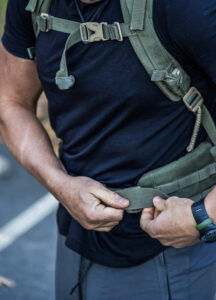
The point here is that you’re not trying to empty your head, instead you deliberately direct it. You’re sorting plates, not clearing space.
The Hangar
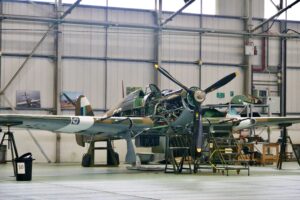
The hangar is the place where planes go when they’re not flying. This isn’t because they are broken and needing repair. Every airframe needs maintenance and inspection between flights. Your body is the same, the hangar is the place which keeps you mission ready. Most people treat maintenance as optional, something that is only done when there is a problem. We need to break this mindset, it’s backwards. The hangar visit happens before the pain, not after.
Your feet take the beating first; each step works the arch with force you might find hard to believe. A rucker at 190lbs bodyweight carrying 60lbs with a fast pace, has an inertia of ground reaction forces of 1.5-2.2 times that of the static weight. One foot is seeing roughly 375-550lbs every step. Let that sink in. The plantar fascia can see up to 625lbs at push off during a shuffle on a rough trail with roots and rocks.
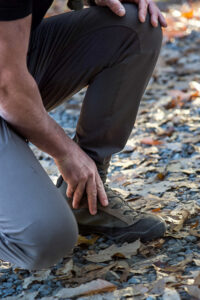
Blisters, black toenails, stress fractures, plantar fasciitis all will ground the aircraft for days or even months. Before this happens, inspect your feet and your footwear after each session. There are usually small indicators that the landing gear is wearing out. Check for hotspots, uneven wear on the boots, any numbness or tingling that lingers after a session. Check the interior of the boot, a worn-out midsole loses its shock absorption without looking any different on the outside. Rotate pairs during hot months. Moisture which doesn’t fully dry will degrade the boot faster than a dry one.
Mobility is like checking the ailerons, flaps and rudder for full deflection. (This section WILLhave its own article at some point in the future)
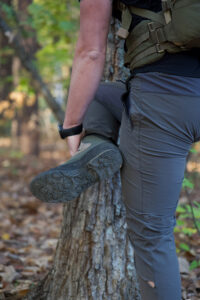
Tight muscles are like corroded linkages which prevent the control surfaces from moving. Hours under load can tighten up the hip flexors, calves and thoracic spine. Simply stretching out those hips and hanging from a bar after the session will do far more good than you may realise. Dynamic cool downs are excellent.
Leg swings from front to back and side to side – loose and controlled
Hip circles, both directions
Walking lunges with a torso twist to open up the thoracic spine
Ankle circles both directions
Bar hangs
Turn and reach to open up the thoracic and chest
Core stability is fuselage. Everything hangs off of it. The ability to transfer torque down and up the chain all relies on a strong dynamic core. A weak core means the ruck’s weight shifts to the skeletal structures of your spine, they are like the guardrails, your muscles are the steering wheel, don’t scratch the paint. Incorporate into your workouts. Dead bugs, bird dogs, planks, side planks, crunches and wood chops with a cable or band. Do these 2-3 times per week. I’m not going to prescribe to you reps and duration, that’s for you to figure out by listening to your body, over time you will know what the most appropriate stimulus is for your level of strength and fitness.
Decompression after the session is that last inspection, this is not only physical but mental. This is to tell your body the flight is over. Take a few minutes to lightly stretch and mentally absorb your thoughts on the session. Did I go hard enough, too hard? How are my boots feeling with that new lace pattern etc. Keep your mind off life stress and use this time to analyse the flight.
Now call in the fuel truck, close the hangar door and turn off the lights until the next flight.
The Flight Plan
Every instrument in the cockpit measures something physical. But that’s all they can do is give you data. But what is the purpose of the plane being in the air to begin with, every flight has to have a purpose, some very meaningful, like a life-flight bringing a patient to get lifesaving care, others less so, like the flight to the coast for that $400 burger and fries. The life flight has a mission brief written by someone else, while the burger run is a personal choice. Unless you are active duty in the infantry or part of a long-range recce unit, most rucking is done by people who must find intrinsic motivation to get up each day to continue it year over year, through injuries and doldrums. Arguably intrinsic motivation is what brought the soldier or marine into the selection and through to the other side. We all have to have a motivator. Whether it’s big or small to the world, it must be big to you. If not, you will not withstand the long race.
Purpose – This is the difference between the mission and a hobby. For most people the purpose may start shallow, lose weight, get fit, prove something to someone…then what? There is no shame in that, but it’s a starting point, it’s a runway with a threshold at the other end. At some point after the wheels lift off the asphalt you’re left alone in the cockpit staring at the gauges ALONE.
What happens after your first injury or the first boring month of winter training and the mission dissolves?
The mission was borrowed from an Instagram photo, or a version of yourself you were trying to impress. This is why you need purpose. You don’t need to have purpose when you start, but you better find it fast, the purpose is usually found somewhere between the base and the summit, in the moments of doubt and suffering with odds stacked against you.
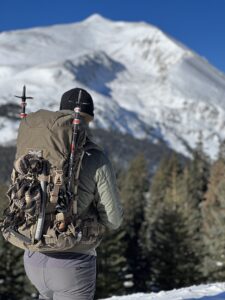
This is where you will find a break in the storm clouds and climb right through the gap.
Purpose doesn’t arrive as a lightning strike, it’s built in pieces like a flight plan, one leg at a time. It’s a morning when you didn’t want to go, a day when you’re sitting in the parking lot with the car running, where your mind is begging you to throw the shifter in gear and drive home, a mountain that had one false summit after the next. Fighting through those moments is like towering thunder cumulonimbus clouds just off the port and starboard wings, each time you dodge them and continue to thread the nose of the plane through the gaps, it builds resiliency, not only for rucking, but also for life.
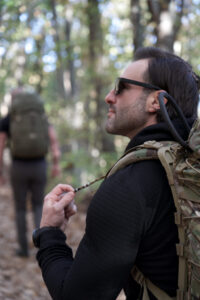
I have always said cardio strengthens your heart; resistance training strengthens your muscles. Rucking…that hardens your fucking soul. Keep reminding yourself, YOU CHOSE THESE MOMENTS and WOULD CHOOSE THEM AGAIN. There is no other way to strengthen your mindset in easy moments. Each time you feel doubt, use that as a gift to overcome it. THAT’S HOW WE GET STRONGER.
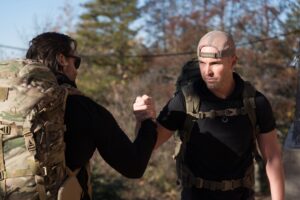
A training partner is one of the simplest ways to keep the flight plan honest. When someone else is waiting at the trailhead, the excuses lose most of their power. You can still talk yourself out of a solo session when the alarm goes off; it’s a lot harder when your buddy is already lacing up. The real benefit isn’t that they make the ruck easier—it’s that they make skipping harder. On the days you don’t feel it, their presence is often enough to get you off the couch. Over months and years that small difference compounds. You still need your own purpose, but a reliable partner makes it easier to protect it when motivation dips.
Temptation bundling – This is the next lever at your disposal; it’s like the afterburner you only get to use sparingly. Pair the ruck session with something you already enjoy but only allow it during that window. A podcast you save exclusively for the session, music you only listen to while you are out. Things that exist only in your ears between the first step and the last. Your brain will start associating the suffering with the reward, over time the two will fuse. The ruck stops being the thing you endure, to get the reward. It becomes the reward.

The trap is making the reward the only reason you show up. If the reward loses its potency, your motivation will die with it. We don’t want to build a dependency, but a way of life. Remember, purpose is the real motivator. Use this technique to deepen the session, not to replace why you’re out there.
Affective forecasting – Your brain has a terrible habit of predicting how you are going to feel about a task before it even happens. You think the long ruck scheduled for later that day will feel miserable, or that gym session and its leg day. So, you don’t go. How many workouts have you dreaded and come out of it feeling amazing with a rewarding satisfaction. The story here is that your brain is a terrible fortune teller because it weighs the immediate cost. It focuses on the cold, the wet and the effort ahead. It never focuses on the delayed reward months later. The fix isn’t to ignore the forecast, it’s to focus on the logbook after the session, that way the next prediction has real data instead of dread.

Implementation intentions – A wish without a plan is an aircraft without wings or an engine. “I plan to ruck this weekend” is a useless statement without action. It has no trigger and no time; it’s simply a mood masquerading in a sentence. Setting up strategic actions along the way between now and this weekend is called implementation intentions. Without them when Saturday morning hits it’s potentially already too late. On Thursday evening, you should be packing out your ruck, filling the water bladders, pulling out boots and socks. Friday night you should be preloading your car with your kit. That way when Saturday morning hits, you are already fully committed. It’s going to happen. If you wake up Saturday unprepared, you have already lost, you’ve left the door open for the moment to decide; in the moment is where weakness and excuses reside. Your brain will offer you 100 reasons to stay home, each one will sound rational, but they are 100 lies. Implementation intentions aren’t about discipline. They are tools to remove decisions from the mental battlefield when the flak starts to pop around the aircraft.
In aviation, when an aircraft is rolling down the runway there is a point of no return, the aircraft is going too fast to stop in time with a blown engine, but not fast enough to climb out, the pilots are committed to taking off and finding a landing spot somewhere ahead. This is the most dangerous part of a flight. Implement this metaphor into your ruck session. Pick the moment that works for you, once crossing that point, commit to giving it every ounce of energy for a successful session and land that plane safely. It could be turning the key on the car, lacing up the boots, but it must be done early enough to prevent any chance of backing out.
Breaking the monotony – There are strategies built to get you motivated without addressing one of the main root causes for burnout, monotony. Rucking the same trail, the same time, same load doing it week after week is a recipe for burnout. Instead, pick one day per week which becomes your wildcard. Preselect a handful of different routes, trail types, distances, terrain etc. Shuffle them like a deck of cards in a randomised order. On the day before the session while you are packing up your kit, randomly select the route. The surprise will give you something to look forward to. If you treat your sessions like cuisine, and keep it interesting you won’t get bored. It’s no wonder people have literally starved to death by only eating the same food over and over.
The long game and the short game – The long game is the decade ahead; it’s the version of you ten years from now. The short game is this morning; numerous micro-achievements keep you on track. Unfortunately, many people focus on the summit and get discouraged, where seeds of doubt settle in. The irony of the long game is that I believe you shouldn’t focus on it, why? What happens when you finally get to the end, then what? It’s like a road that leads to the ocean, dead end.

A decade ago, I found myself spending a year learning how to walk again. I first had to learn how to stand up, then step with aid from my living room couch to the kitchen and back. I genuinely couldn’t walk to the mailbox, then one month I was able to. I then began to get a small sense of excitement when I was able to do that. One day I made it to the cul-de-sac. I kept picking things I honestly thought I wasn’t ready for or able to do. My thirst for micro achievements brought me to a day where I bit more than I could chew. I went grocery shopping, I found myself sitting in the cooler section on the edge of a freezer in agony, but I was able to finish shopping after a rest while people were walking by trying not to stare. I did forget the milk that day. I kept getting excited from doing things I thought weren’t possible. Eventually fast forward a decade, I am ruck running, climbing high peaks in North America and Europe. I enjoy doing things which seem almost impossible to me, but are they? This is my own personal motivator strategy; you must find your own. What do you think is almost impossible? Pick that and surprise yourself.
Kennedy said, “We do things not because they are easy, but because they are hard.”
Diversion Airports

Every good pilot builds a diversion airport into their flight plan. Not because they expect to, the reality is that the weather doesn’t care about your plans. Your training cycle needs the same. Before any block of rucking, write down three fallbacks. Dropping weight, choosing flat ground, doing stairs, new location; or swap to a completely different modality altogether like cycling or swimming. Shin splints and plantar fasciitis are a perfect example of storm clouds you shouldn’t fly the plane directly into. You won’t beat them with determination alone. You must have a strategy for diverting and flying to the destination when the weather clears.
How to know when to divert?

In a nutshell without getting into all the specifics, pain which increases session to session. Numbness or tingling that lingers after you stop. Swelling that shows up after the session. Sharp or localized pain. These are some common warning lights, seeing a specialist rather than ignoring these symptoms will clear the weather faster to get you back airborne.
Altitude
Every flight has three phases, climb, cruise and descent. Climb is where you build altitude progressively yet slowly, too much pitch and the aircraft loses too much speed and can stall. When charting out your climb profile and cruise altitude for a training block I recommend progressive overload across weight, distance, and terrain gradually for six to twelve weeks. The goal isn’t a peak performance — it’s raising the ceiling ever so slightly so everything after it feels easier when you come back down, due to improved strength and conditioning. You’re not racing here. You’re building altitude.
When reaching cruise, you level off. Weight and volume stay roughly constant. This is where adaptation actually consolidates, your desired altitude is when you know that injuries won’t occur if this is done for an extended period of time any higher and overtraining begins to occur. At this altitude your body stops adapting to the new stimulus and starts owning it. Cruise can last as long as you want, but it shouldn’t feel like climbing. If it starts feeling like work again, you’ve drifted back into a climb without noticing, if that happens your desired cruise altitude was too high for the engines.
In descent you pull back on the thrust levers and pitch down gently. This training block is designed for joint and tissue recovery and full adaptation to occur. To do this cut volume by a third to a half. You should keep some intensity so you don’t go backwards, but chill a little bit on the throttle and let the body absorb everything it built. This is the phase people skip because it feels like doing nothing, it’s not. It’s the frustrating requirement for the process of homeostasis. It compounds and one that resets to zero every time you get tired.
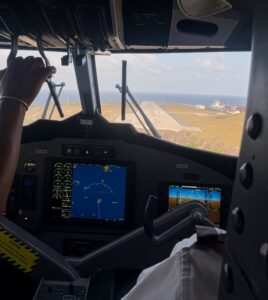
You land –> refuel –> hangar time –> Preflight –> Takeoff
Then you climb again. The cycle doesn’t end; it repeats at a higher starting altitude each time. That’s the whole point. You’re not trying to reach one summit. You’re trying to make the next climb start from higher ground than the last one did.
Endurance
This is not to be confused with how long your sessions go for while maintaining strength and stamina. In aviation, endurance is how long a plane can be airborne, not how far it can travel, but how long before the aircraft runs out of fuel.

Endurance is what separates someone who rucks for a season from someone who rucks for decades to come. It’s not about how hard you can go today. It’s about whether the joints, ligaments and muscles can continue year after year. Every aircraft has a finite supply of fuel it can carry before a refuel is necessary. Enough flight hours and the aircraft needs inspections and maintenance. Treat your body the same way, do this correctly and you will be able to keep that aircraft airworthy for decades to come.
Conclusion
A good pilot has an understanding of how to read the gauges, navigation instruments and weather. A seasoned pilot can do it when an instrument fails, or the weather deteriorates.
A seasoned rucker does the same with their body. That’s the difference between knowing the checklist and trusting it. When the temp gauges spike, the seasoned pilots don’t panic, they analyze it. When your rucking goals seem to become impossible when things don’t go according to plan, don’t quit, check the flight plan. The instruments were always just tools. The skill was learning to fly without staring at them.